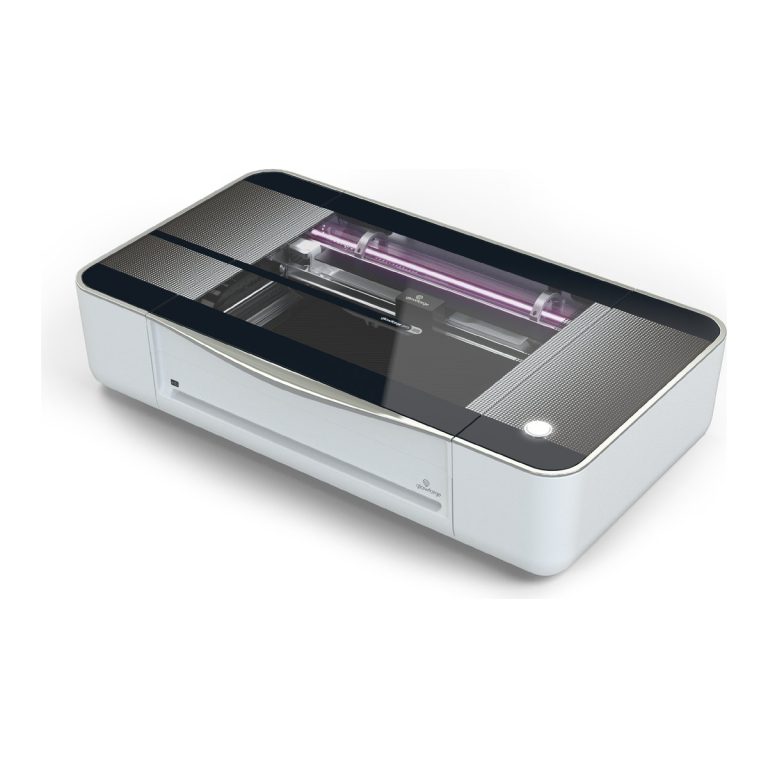
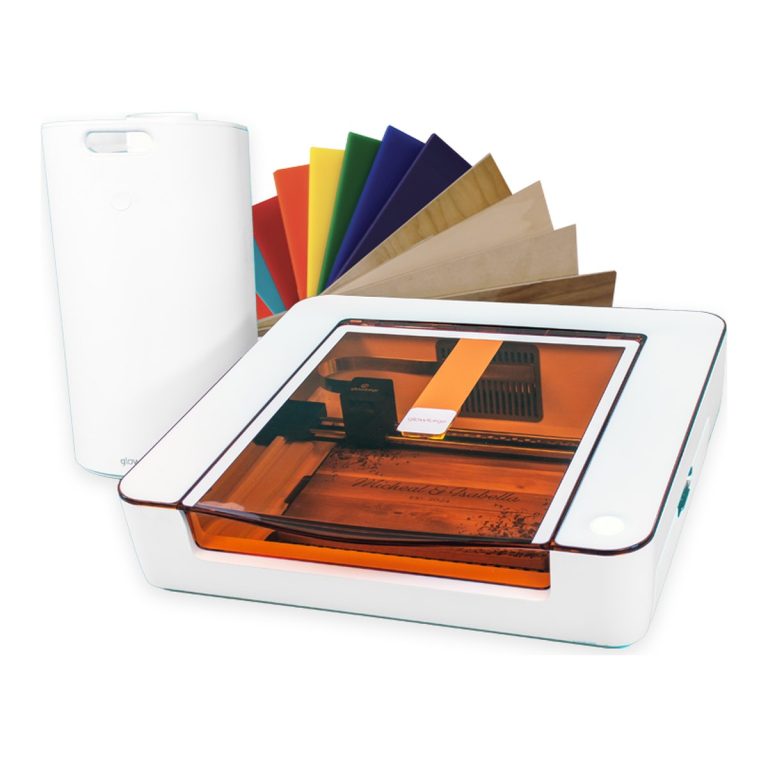
Glowforge builds desktop laser cutters aimed at people who want to make things without learning a workshop first. Its machines cut, engrave and score what the company describes as hundreds of different materials, including wood, leather, acrylic and fabric, and the whole product has been designed around removing setup rather than exposing it.
The range runs from the Aura, a small and portable machine pitched at crafters and classrooms, through the Plus, up to the Pro. The Pro is the fastest and most powerful of the three and it adds a passthrough slot, which lets material longer than the bed feed straight through the machine so a project is not limited by the size of the case. There is also a Spark in the line.
Two things set the experience apart from a typical diode engraver. Glowforge sells its own Proofgrade materials, which the machine recognises so the settings are chosen for you rather than dialled in by trial. And its software includes an image generator: you describe an idea, pick an art style, and it produces artwork you can cut or engrave without using a separate design tool.
That focus makes Glowforge an easier first laser than most, and the trade is the usual one. A closed ecosystem and branded materials cost more per project than running a generic diode machine, and you are buying into the company’s software as much as its hardware.