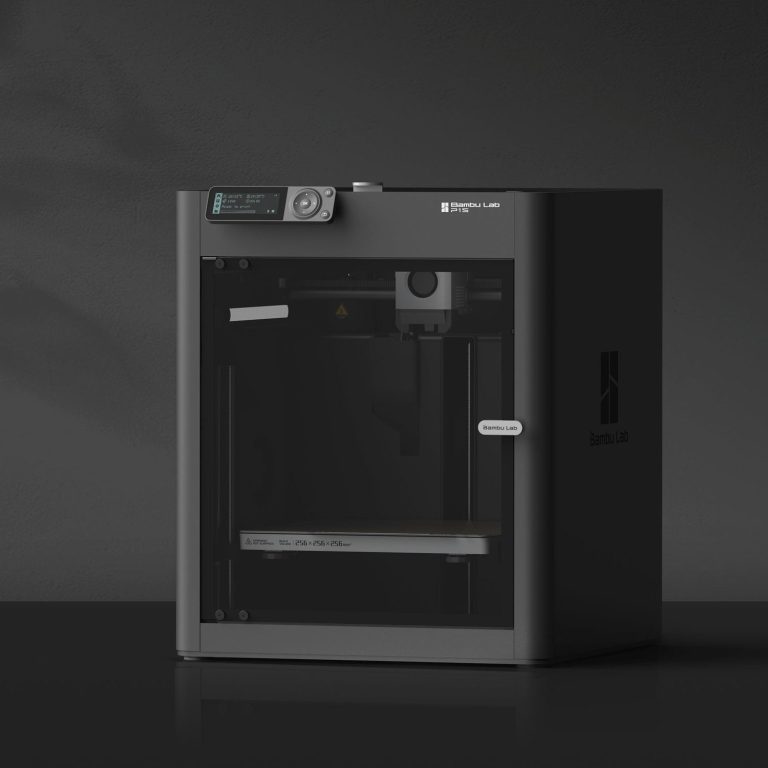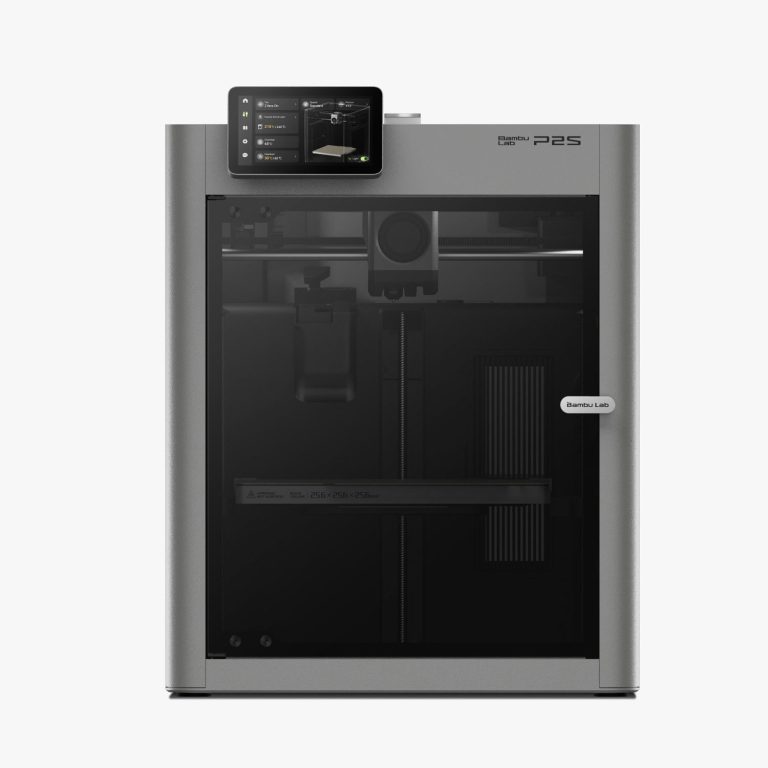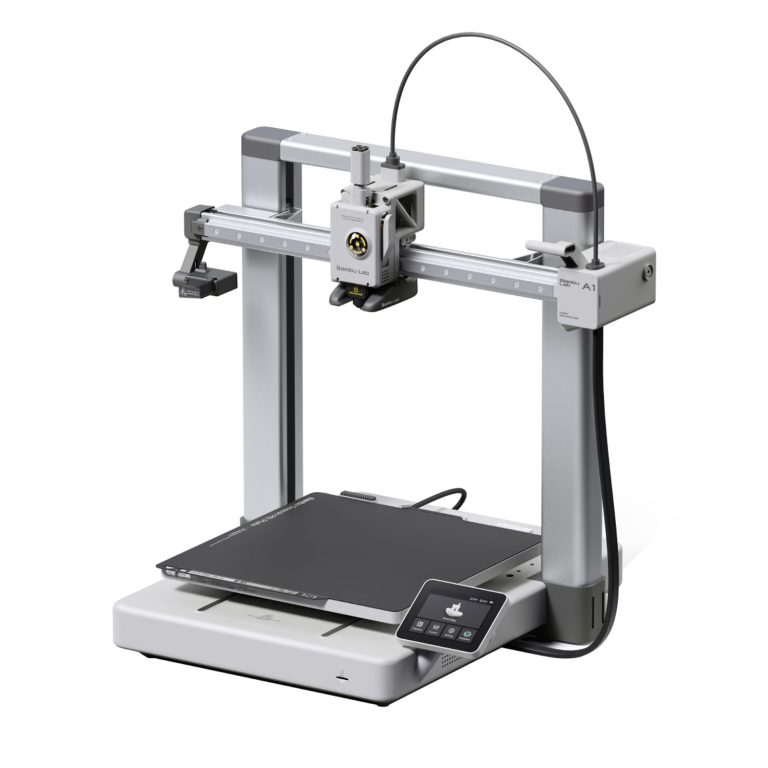

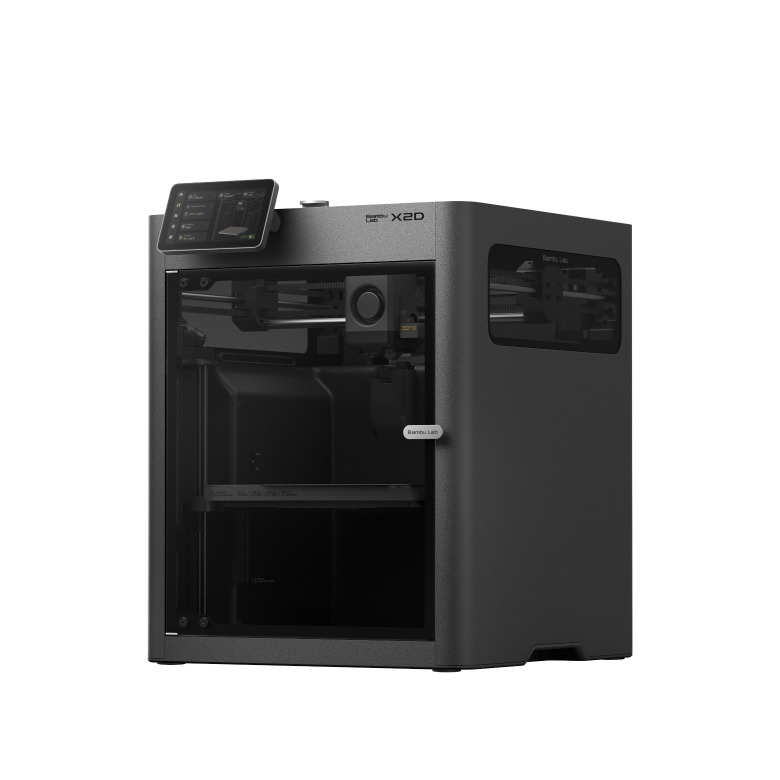
What the Bambu Lab X2D is for
Bambu Lab sells the X2D in two forms. The bare machine is 649 dollars and the AMS Combo is 899, both read off Bambu Lab’s own US store on 14 October 2026. The difference between them is the AMS, so the real question is whether you want to print in more than one colour.
The second nozzle is the whole point
On a single nozzle printer, every switch between model and support material pushes the old filament out of the nozzle as waste. The X2D puts the support material on its own nozzle, so the switch costs nothing. Planet 3DP printed the same part on an X2D and a P2S to put a number on it. The X2D finished in 4 hours 14 minutes using 96 grams with no purge at all. The P2S took 7 hours 25 minutes and used 148.55 grams, of which 59.69 grams went in the bin. That is about 40 percent of the filament on that print, wasted. The full side by side is in our X2D review roundup.
The practical effect is cleaner parts. Because the support touching your model is a different plastic, it peels away instead of welding on, which is what makes a printed part stop looking printed.
What the heated chamber adds
Bambu’s own filament table lists ABS, ASA, polycarbonate and nylon as needing an enclosed printer with chamber heat, to stop warping and layer separation, and lists them as not recommended on an open frame machine. The X2D’s chamber puts those materials on the table. Planet 3DP tested nine engineering filaments against two support interfaces on this printer: Support for ABS gave the cleanest release on most of them, with carbon fibre nylon the exception, where ASA works better.
Who should skip it
If everything you print is PLA in a single colour, the cheaper machines in the range do that just as well and you will not miss the second nozzle. The X2D earns its price when you print functional parts in engineering materials, or when picking supports off by hand has started to cost you real time.