
What Nick measured on the P2S
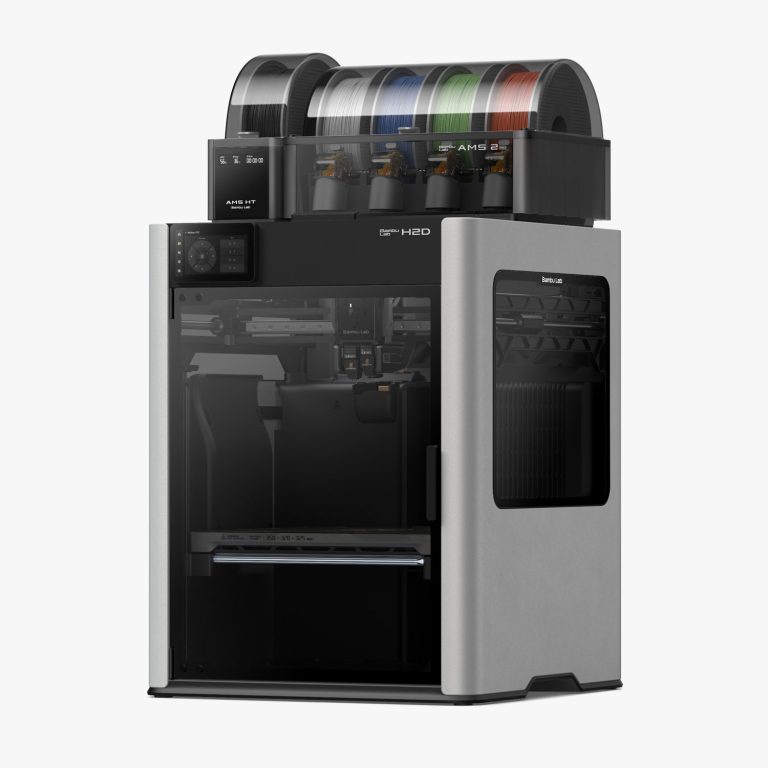
Planet 3DP’s Nick Nicholls printed the same Dilophosaurus jaw on a P2S and on Bambu Lab’s dual nozzle X2D, with the same model, slicer and settings (watch the test). On the P2S the jaw was PETG with PLA support interface layers fed through the AMS. It took 7 hours 25 minutes and 148.55 g of filament, and 59.69 g of that was purge waste (watch at 3:54). The X2D printed the same part in 4 hours 14 minutes on 96 g, with nothing purged between its nozzles.
That’s the cost of one nozzle doing two jobs. Every switch from PETG to PLA and back is a full filament change. Nick is clear it isn’t a knock on the P2S, and on the model surface he says he’d have to look very closely to tell the two machines’ PETG prints apart (watch at 7:55).
What it fixes over the P1S
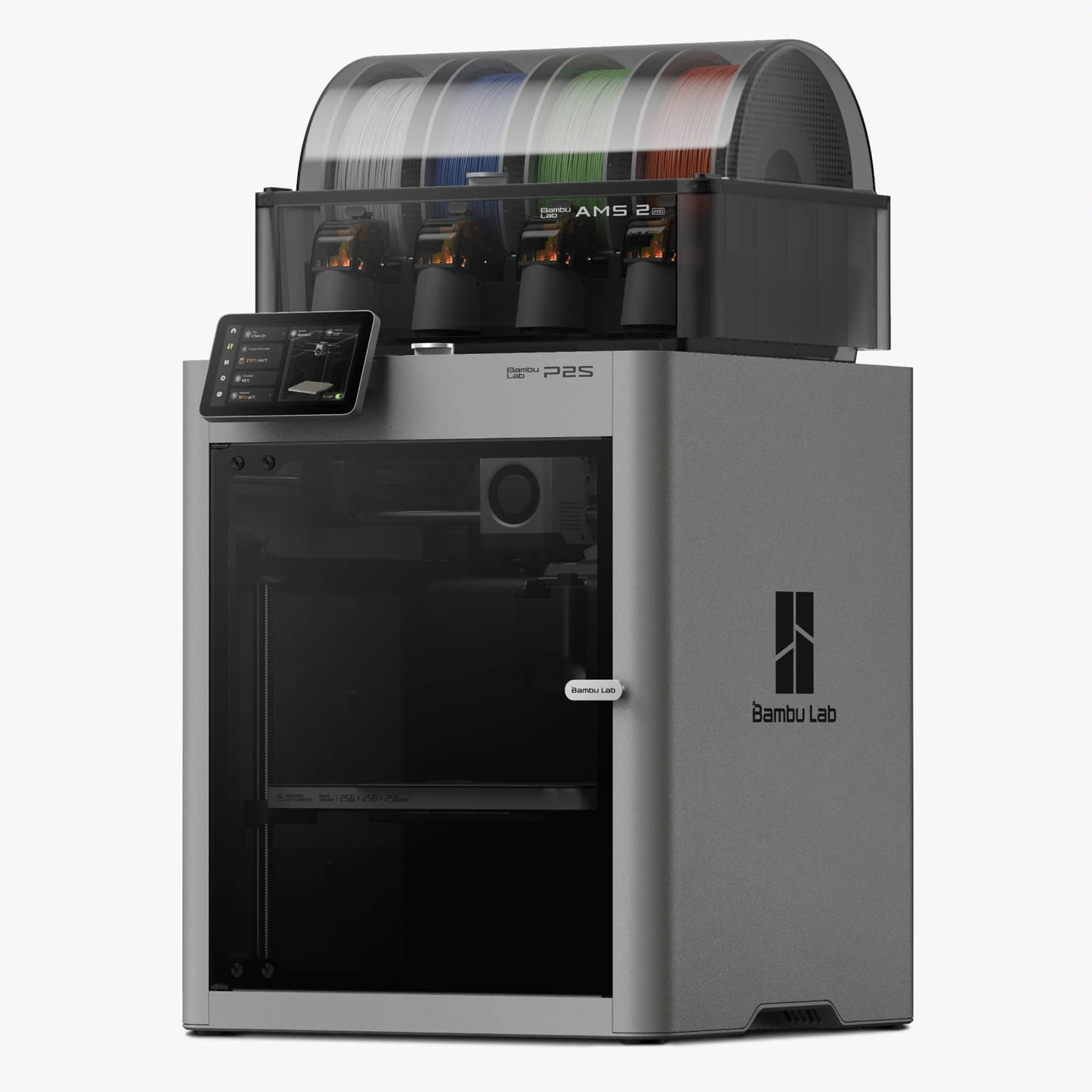
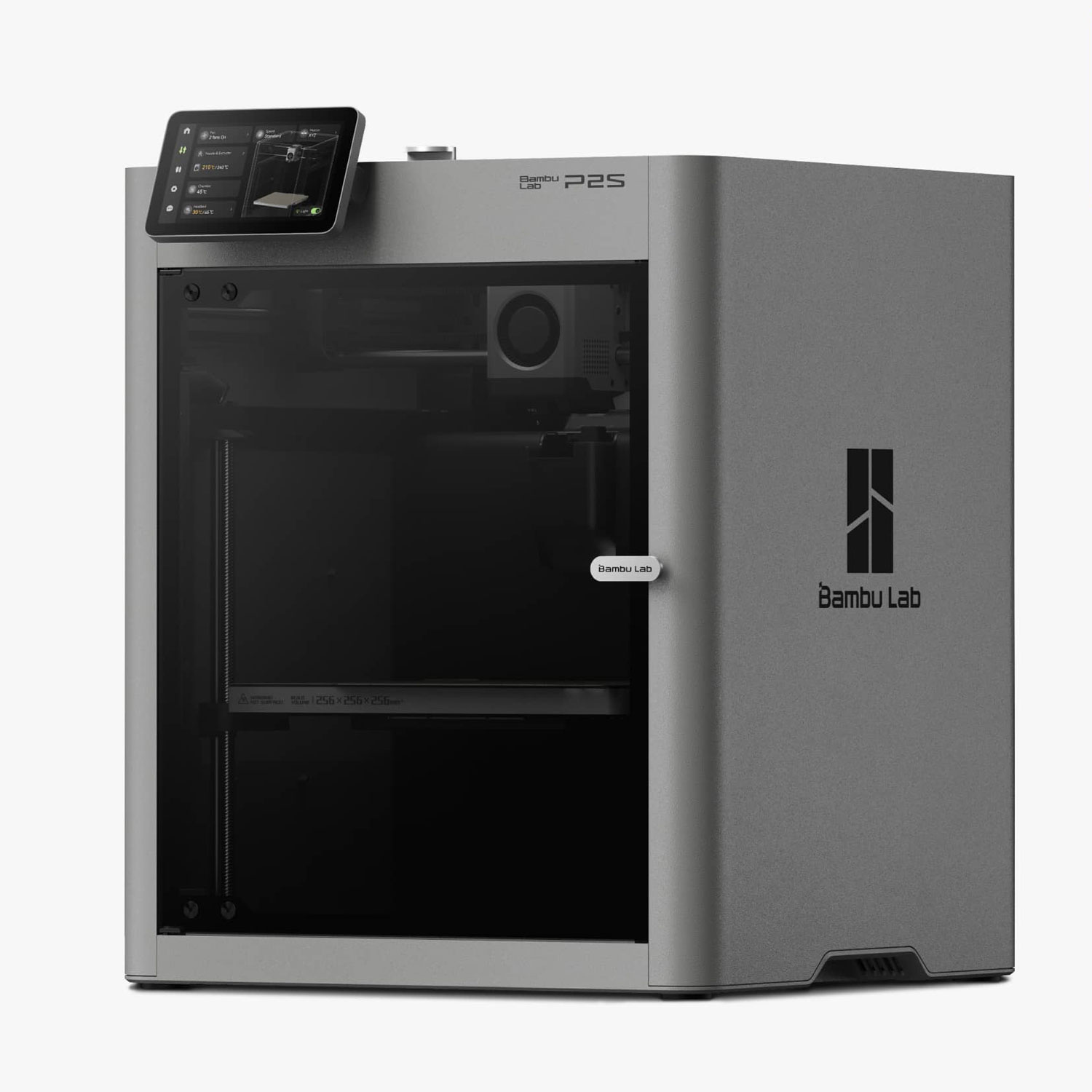
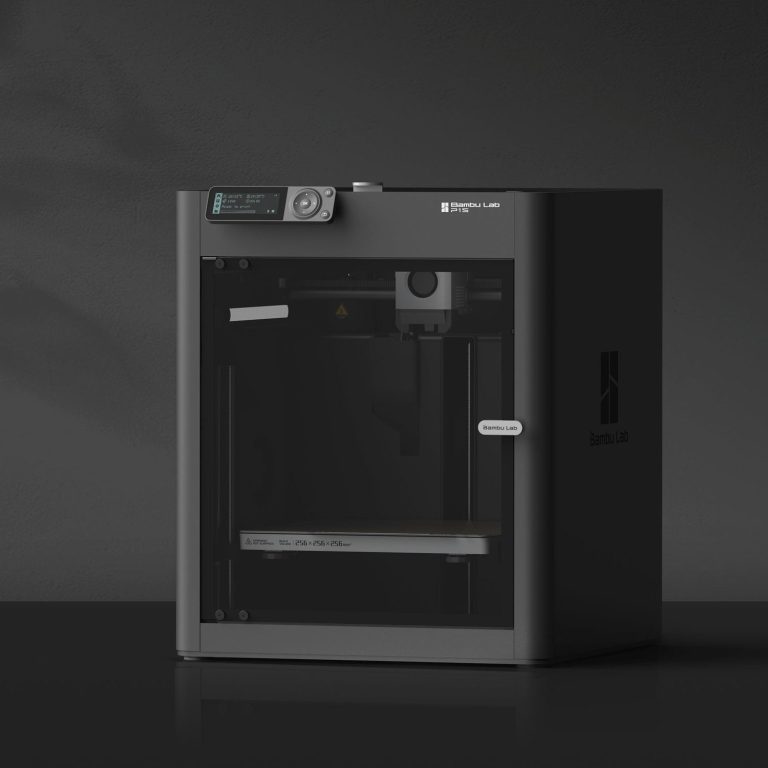
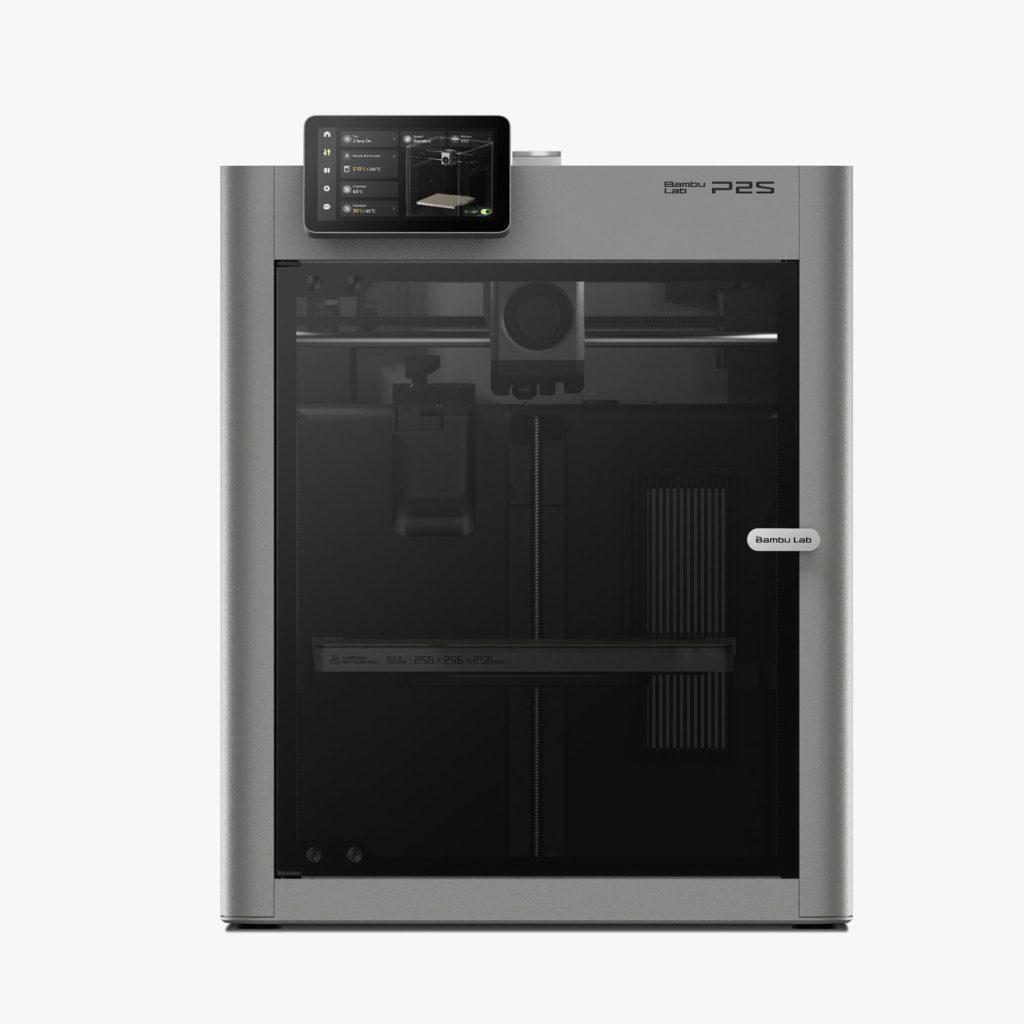
Nick runs two P1S machines in his print farm and calls the P2S “a direct upgrade to that” (watch at 1:09), with a better extruder, better thermals, a new touchscreen and the AMS 2 Pro with active filament drying. In a short he picked out three fixes. Quick swap nozzles, a dual inlet hub that keeps the AMS and an external spool connected at once, and a camera and lighting that are “finally usable” (watch the short). His maintenance video adds a lip in the base you can sweep debris out through, and a better nozzle wiper pad than the P1S had (watch at 4:00).
Where the video and Bambu Lab differ
In the video Nick lists both machines at 1,000 mm/s (watch at 8:12). Bambu Lab’s own P2S specification table gives a top toolhead speed of 600 mm/s, so this page goes by Bambu’s figure. He also puts the passively heated chamber at around 60°C, while Bambu describes the P2S as 50°C chamber ready, and again Bambu’s figure is the one to plan around. Bambu lists a 256 by 256 by 256 mm build volume, a hardened steel nozzle and a 300°C hot end.
Who it suits
Nick’s call is “Get the P2S if your prints are not living or dying by support removal” (watch at 12:04). That covers toys, multicolour PLA and PETG, and functional parts where the surface under a support doesn’t need to be perfect. He also rates the DynaSense extruder for high flow and abrasive filaments such as carbon fibre and glass fibre. If you print skulls, creatures or anything with heavy tree supports, the X2D’s second nozzle is the better spend. The full numbers are in our P2S vs X2D comparison and our P2S review.