
Some links on this page are affiliate links. If you buy through one, Planet 3DP earns a small commission at no extra cost to you. It never changes what we recommend. How this works.
Diode vs CO2 laser is really a question about materials. A diode is the budget way to cut and engrave wood, leather, card and dark acrylic. A CO2 laser adds clear acrylic, thicker cuts and glass engraving. For metal you need a fiber or MOPA laser. UV is the specialist for glass, copper and heat sensitive parts.
The wavelength decides what a beam can do, more than the brand or the watts. This guide puts the four types in one chart, then answers a question that needs real numbers: can a laser engraver cut metal? Every claim comes from a maker’s own page, read on November 13, 2026.
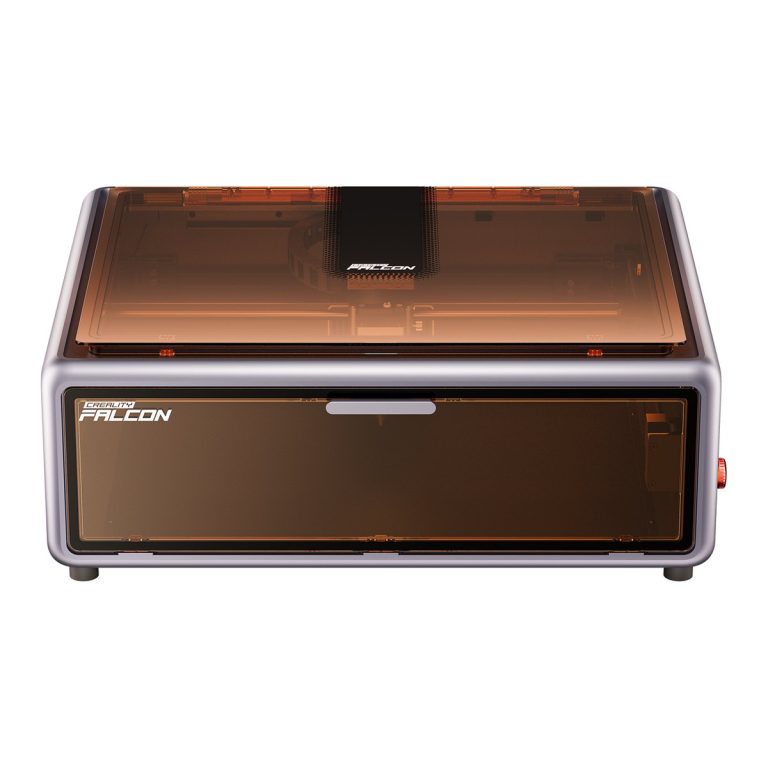
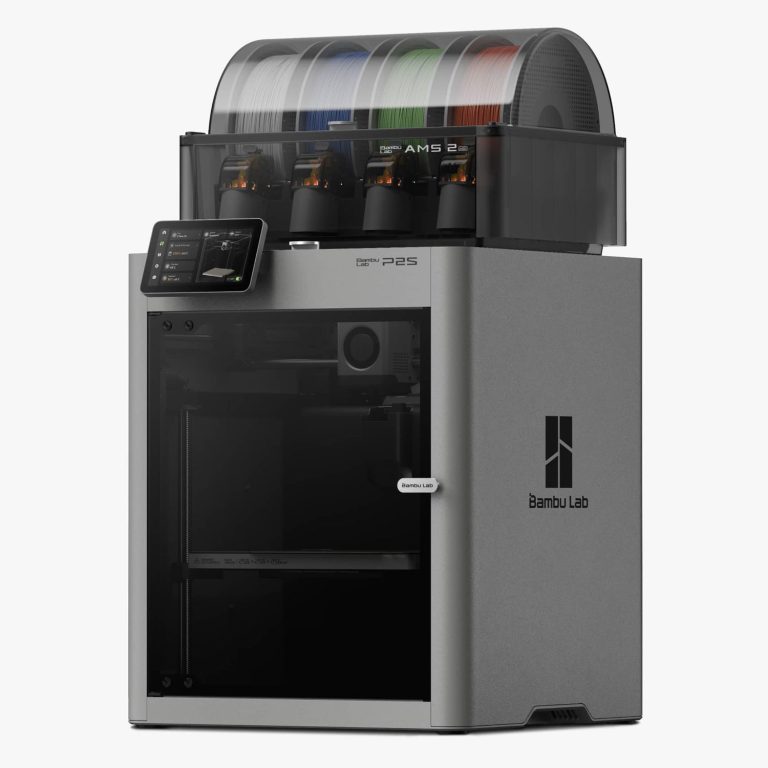
Want machines and prices? Our best laser engravers guide has the picks, and the laser engraver directory lists every laser we track, with specs and live prices. xTool works with Planet 3DP and plans to send Nick a laser for a future video. It isn’t an X1, and nobody here has used an X1. The xTool links on this page are affiliate links, the same as the Creality Falcon and Bambu Lab ones.
- Diode (450 nm)
- Wood, leather, card, fabric and dark acrylic. The cheapest type, per xTool. No clear acrylic.
- CO2 (10.6 micrometers)
- Everything a diode does plus clear acrylic, thicker cuts, and glass and ceramic without a coating. No bare metal.
- Fiber and MOPA (about 1,064 to 1,090 nm)
- Metal. Deep engraving, colour on stainless steel, and thin sheet cutting on some machines. Not wood or glass.
- UV (355 nm)
- Glass, including engraving inside it, plus copper, silver and gold. No maker we read gives it a cutting figure.
- Tested by Nick
- One diode, the Creality Falcon2 Pro, in his denim engraving video. The rest is spec based.
Wavelengths from xTool, Trotec and Keyence. Material claims from the makers’ pages listed under Sources, read November 13, 2026.
What each laser type can cut and engrave
Read across a row to see which beam handles a material. Cuts means the maker says it goes through. Engraves or marks means surface work only.
| Material | Diode | CO2 | Fiber and MOPA | UV |
|---|---|---|---|---|
| Wood and plywood | Cuts and engraves | Cuts and engraves | Not suitable (xTool) | Engraves, including relief (xTool X1 page) |
| Leather | Cuts and engraves | Cuts and engraves (Bambu Lab R1) | Engraves, though xTool calls fiber less suited to organics | No maker claim read |
| Paper and card | Cuts and engraves | Cuts and engraves | No maker claim read | No maker claim read |
| Fabric | Engraves (xTool, and Nick’s denim test) | Cuts and engraves | No maker claim read | No maker claim read |
| Dark or opaque acrylic | Cuts and engraves some (xTool) | Cuts and engraves | Engraves some opaque acrylic (xTool) | Engraves (xTool X1 page) |
| Clear acrylic | No (xTool, Trotec, Bambu Lab) | Cuts and engraves | No (xTool) | No maker claim read |
| Glass | Only with a coating (xTool). Trotec says no | Engraves the surface | No, the beam passes through (Keyence) | Engraves the surface and inside the glass (xTool X1 page) |
| Stone and ceramic | Engraves stone. Ceramic only with a coating (xTool) | Engraves | Engraves (xTool) | No maker claim read |
| Coated or plated metal | Engraves (xTool) | Engraves (xTool, Bambu Lab) | Marks (Trotec) | No maker claim read |
| Bare steel and aluminum | Surface marks at best, results vary | No (xTool, Keyence, Bambu Lab) | Engraves, and cuts thin sheet (xTool) | Marks (Keyence) |
| Copper, silver and gold | No maker claim read | No (Keyence, for copper) | xTool lists them. Keyence says fiber may not mark copper | Marks, copper included (Keyence) |
Where the sources disagree. xTool’s guide lists stainless steel under diode engraving, and the same guide says diodes struggle with uncoated metal. Keyence says fiber may not mark copper at all, while xTool lists copper for fiber. The chart shows both sides rather than picking one. xTool’s F2 Ultra Q&A also says transparent glass or acrylic can be engraved with help, by applying black paint or art scratch paper to absorb the beam.
Diode lasers: wood, leather, fabric and dark acrylic
A diode laser makes its beam with semiconductors. xTool and Trotec both put it at 450 nm, a visible blue light. The diode module on the Bambu Lab H2D is listed at 455 nm, plus or minus 5 nm.
xTool says diodes cut wood, plywood, MDF, bamboo, leather, paper, felt, cork and some dark acrylic. It’s also the type xTool calls the cheapest, with machines from 5 to 40W. The catch is anything clear. xTool says a diode can’t directly engrave glass or clear acrylic, and Trotec says it can’t process transparent materials at all.
Depth is the other limit. Bambu Lab rates its 10W module at 5 mm of basswood plywood and its 40W module at 15 mm. xTool says thicker material takes more passes on a diode.
This is the one type Planet 3DP has on camera. In his fabric video, Nick engraved denim on the Creality Falcon2 Pro at speed 100 with test lines at 5, 8, 10 and 12 percent power. The 5 percent line didn’t show, and 12 percent gave the cleanest result. The aim was to burn off only the top layer of the jeans without cutting through.
CO2 lasers: clear acrylic, thicker cuts and glass
A CO2 laser fires from a sealed tube of gas at 10.6 micrometers, more than twenty times the diode’s wavelength. Organic and non metal materials absorb it well. On the cutting side, xTool adds clear acrylic, rubber, foam and fabric to what a diode handles. On the engraving side it takes glass and ceramic without the coating a diode needs.
Clear acrylic is the line a diode can’t cross. Bambu Lab tags transparent acrylic and glass as “CO2 Only” on its Bambu Lab R1 page. That machine is a 55W CO2, and Bambu rates it at 20 mm of acrylic, or 15 mm of black walnut plywood on the standard short focus lens and 18 mm with the medium or long lens.
Metal is where CO2 stops. xTool says CO2 lasers can’t engrave uncoated metal, and only special coatings allow limited marking. Trotec says the same about sprays or coatings. Keyence explains why: the long wavelength reflects off metal instead of being absorbed. Bambu Lab’s spec sheet puts it plainly for the R1. Coated metal can be engraved, bare metal can’t.
Fiber and MOPA lasers: built for metal
A fiber laser makes its beam inside an optical fiber doped with rare earth elements. Trotec gives 1.064 micrometers and Keyence gives 1090 nm, so call it about 1,064 to 1,090 nm. xTool lists fiber machines from 20 to over 100W.
xTool lists stainless steel, aluminum, titanium, brass, copper, gold, silver and platinum for fiber engraving and cutting. It also says fiber isn’t suitable for wood, glass or clear acrylic. Keyence gives the reason for glass. Infrared light passes straight through transparent objects.
MOPA is a fiber laser with more control. Trotec lists MOPA pulse control under its fiber lasers. In its F2 Ultra Q&A, xTool says a MOPA source lets you set pulse width from 2 to 500 ns and frequency from 30 to 4,000 kHz, which gives better colour engraving on metal. The colour comes from heat. It builds oxide films of different thickness, and each thickness shows a different colour. xTool names stainless steel, titanium and copper as suitable.
UV lasers: glass, copper and cold marking
UV is the short wavelength end, at 355 nm. Keyence calls it cold marking. The light is absorbed so well that the mark doesn’t rely on heat, which suits plastics and delicate parts that other lasers might melt.
Two jobs stand out. Keyence says UV can mark highly reflective metals that fiber can’t, such as copper, silver and gold, though fiber is faster on most metals. And xTool says the 5W UV source is the only one on the xTool X1 that does glass inner engraving, the 3D designs set inside glass and crystal.
UV is a marking laser. None of the makers we read gives a UV cutting thickness, so this page doesn’t either. A UV laser isn’t a UV printer, which prints colour ink. Those machines are in our best UV printers guide.
Can a laser engraver cut metal?
Some can, but only fiber or MOPA machines, and only thin sheet. It helps to split two jobs that often get mixed up. Marking changes the surface. Cutting goes all the way through.
Diode and CO2 machines don’t cut bare metal. The makers say CO2 can’t even engrave it without a coating, and diodes struggle with it. Trotec lists stainless steel and aluminum among the materials its industrial 40W diode can process, but says there’s no deep engraving on metals. Treat diode work on bare metal as surface marking at most.
Fiber is a mixed picture. xTool’s guide says fiber cuts a long list of metals but gives no thickness. Trotec’s own comparison table lists no cutting use for fiber at all. The only thickness chart we found from a maker is xTool’s, for the xTool F2 Ultra, a 60W MOPA and 40W diode dual laser.
| Material | xTool F2 Ultra | xTool F2 Ultra (Single) |
|---|---|---|
| Stainless steel | 2 mm | 2 mm |
| Brass | 2 mm | 2 mm |
| Aluminum | 1 mm | 1 mm |
| Wood | 23 mm | Not listed |
| Acrylic | 20 mm | Not listed |
So the one published figure is 2 mm of stainless steel, from xTool and untested by us. On the X1, xTool says its 60W MOPA source handles metal colour engraving, embossing and cutting, but the X1 page gives no metal cutting thickness.
What the makers rate their machines to cut
| Machine | Laser | Wood | Acrylic | Bare metal |
|---|---|---|---|---|
| Bambu Lab H2D, 10W module | Diode, 455 nm | 5 mm basswood plywood | Not listed | Not listed |
| Bambu Lab H2D, 40W module | Diode, 455 nm | 15 mm basswood plywood | Not listed | Not listed |
| Bambu Lab R1 | 55W CO2 | 15 mm black walnut, 18 mm with the medium or long lens | 20 mm | Can’t engrave it |
| xTool F2 Ultra | 60W MOPA and 40W diode | 23 mm | 20 mm | Cuts 2 mm stainless steel |
Watts don’t compare across types either. xTool puts diodes at 5 to 40W and CO2 at 40 to 150W, and the beams behave differently, so a 40W diode and a 40W CO2 aren’t the same machine.
One machine with more than one laser
If your materials span two columns of the chart, some machines carry two or more sources.
The X1 starts with a 55W CO2 laser. xTool says you add the 20W Diode Galvo Module first, and that module unlocks 5W UV, 60W MOPA or 30W fiber sources, one external source connected at a time. xTool’s own labels are CO2 for cutting, diode for fast detailed engraving, fiber for metal marking and deep engraving, and MOPA for advanced metal work. Our X1 explainer has every configuration and the launch prices.
The F2 Ultra pairs MOPA with a diode. In industry, Trotec puts CO2 and fiber sources in one machine with its Flexx technology, switching between them by material without changing the tube, lens or focus. Bambu Lab sells the H2D 3D printer as a Laser Edition, and a standard H2D can take the diode module through an upgrade kit.
Laser class belongs to the machine, not the type. Bambu Lab rates the H2D’s laser module Class 4 on its own, and the whole printer Class 1 when its protection is complete. The R1 is Class 1 enclosed and Class 4 with the riser base or auto feed. xTool says the X1 runs as a Class 4 device with its Intelligent Conveyor Feeder. Check the class on the page for the exact setup you buy.
Line up the machines yourself. Our compare tool puts any lasers we list side by side, with specs and live store prices.
Open the compare toolDiode vs CO2 vs fiber vs UV: which one fits you?
Choose a diode if you work mostly in wood, leather, card, fabric or dark acrylic and want the cheapest way in. The Creality Falcon2 Pro is the one Nick has used. Our laser engravers for beginners guide covers smaller first machines.
Choose CO2 if you need clear acrylic, thicker cuts or glass engraving, and you don’t need bare metal. The Bambu Lab R1 is one example.
Choose fiber or MOPA if metal is the job, from deep marks to colour on stainless steel. Only a few machines publish metal cutting figures, and the F2 Ultra’s 2 mm of stainless steel is the one we found.
Choose UV if you engrave glass and crystal, mark copper or gold, or work on parts that can’t take heat. On the X1 it’s an add on source.
Not sure yet? Start from what you’ll make most, find that row in the chart, and then shop the type. The picks and prices are on our best laser engravers guide.
Laser type questions
What is the difference between a diode and a CO2 laser?
The wavelength. A diode is 450 nm blue light and a CO2 laser is 10.6 micrometers. xTool and Trotec both say diodes can’t process clear acrylic or glass, while CO2 cuts clear acrylic and engraves glass. xTool lists diodes at 5 to 40W and CO2 at 40 to 150W.
Can a diode laser cut clear acrylic?
No. xTool, Trotec and Bambu Lab all say clear acrylic needs a CO2 laser. xTool says a diode can cut some dark or opaque acrylic.
Can a laser engraver cut metal?
Only fiber or MOPA machines, and only thin sheet. xTool rates its F2 Ultra at 2 mm of stainless steel, 2 mm of brass and 1 mm of aluminum. Diode and CO2 machines don’t cut bare metal.
Can a CO2 laser engrave metal?
Only coated or plated metal. xTool, Trotec and Keyence all say CO2 can’t mark bare metal, and Bambu Lab says bare metal can’t be engraved on its R1.
What is a MOPA laser?
A fiber laser with adjustable pulse width and frequency. xTool says that control gives better colour engraving on metals such as stainless steel, titanium and copper.
What is a UV laser good for?
Glass, including engraving inside it, and reflective metals such as copper, silver and gold. Keyence calls UV at 355 nm cold marking because it doesn’t rely on heat.
Has Planet 3DP tested these laser types?
Only a diode. Nick engraved denim on the Creality Falcon2 Pro in his fabric video. The CO2, fiber, MOPA and UV sections come from the makers’ own pages.
- xTool: Fiber vs CO2 vs Diode laser engraver guide, updated July 27, 2026 (checked November 13, 2026)
- Trotec: Diode vs CO2 vs Fiber laser comparison guide, November 4, 2025 (checked November 13, 2026)
- Keyence: Fiber vs CO2 vs UV, which laser marker should I choose? (checked November 13, 2026)
- xTool Support: F2 Ultra Q&A, cutting thickness chart, MOPA and colour engraving, updated November 12, 2026 (checked November 13, 2026)
- Bambu Lab: H2D tech specs, laser module (checked November 13, 2026)
- Bambu Lab: R1 page, material list (checked November 13, 2026)
- Bambu Lab: R1 technical specifications (checked November 13, 2026)
- xTool X1 page: laser sources, materials and safety footnote (checked November 13, 2026)
- Planet 3DP on YouTube: How To Laser Engrave Clothing! (November 8, 2024), denim test from 6:04 (checked November 13, 2026)

Host of Planet 3DP. I have been 3D printing for over four years, with tens of thousands of print hours across Bambu Lab, Anycubic, Creality, Elegoo and Snapmaker machines. The Creality Falcon2 Pro is the laser I’ve used on the channel. The rest of this page comes from the makers’ own pages. Planet 3DP on YouTube.
Last checked November 13, 2026.