

Some links on this page are affiliate links. If you buy through one, Planet 3DP earns a small commission at no extra cost to you. It never changes what we recommend. How this works.
The best resin 3D printer for most people buying this Black Friday is the Elegoo Saturn 4 Ultra 16K: 14 x 19 micron detail and a heated tank for 399 dollars. For miniatures on a budget, the Mars 5 Ultra. For a bigger plate, the Anycubic Photon Mono M7 Pro. And the one Nick has actually printed with is the HeyGears Reflex, which he says is easier to use than older resin printers.
HeyGears sent Nick the Reflex and its wash and cure stations. They were unpaid units, not a paid sponsorship.
Browse every resin machine we list on the resin 3D printers page. This guide narrows it down by job. Only the Reflex has been on Nick’s bench, so every other pick is labelled not tested by Nick and uses the maker’s own numbers.
- Best overall
- Elegoo Saturn 4 Ultra 16K, 399 dollars (list 649.99). Not tested by Nick
- Best for miniatures on a budget
- Elegoo Mars 5 Ultra, 284 dollars (list 338). Not tested by Nick
- Biggest build plate here
- Anycubic Photon Mono M7 Pro, 459 dollars (list 669). Not tested by Nick
- Tested by Nick
- HeyGears Reflex, Nick’s own resin printer, 1,399 dollars regular price
- Budget for extras
- A wash and cure station (109 dollars for Elegoo’s) plus about 19 to 24 dollars per kilo of resin
Prices from the Planet 3DP price tracker, checked October 27, 2026, except the Reflex, from HeyGears’ own US store the same day.
Best resin 3D printers: the picks
HeyGears Reflex
Best for an easy workflow. Tested by Nick.
- 385+ nm light, 33 micron XY pixel, plus or minus 16 micron accuracy
- 191 x 121 x 220 mm build volume
- Automatic resin refill and a heated resin tray
- Nick’s own resin printer, filmed against his Bambu A1
1,399 dollars regular on HeyGears’ US store, 979.30 on sale when checked, list price checked October 27, 2026
Check price at HeyGearsElegoo Saturn 4 Ultra 16K
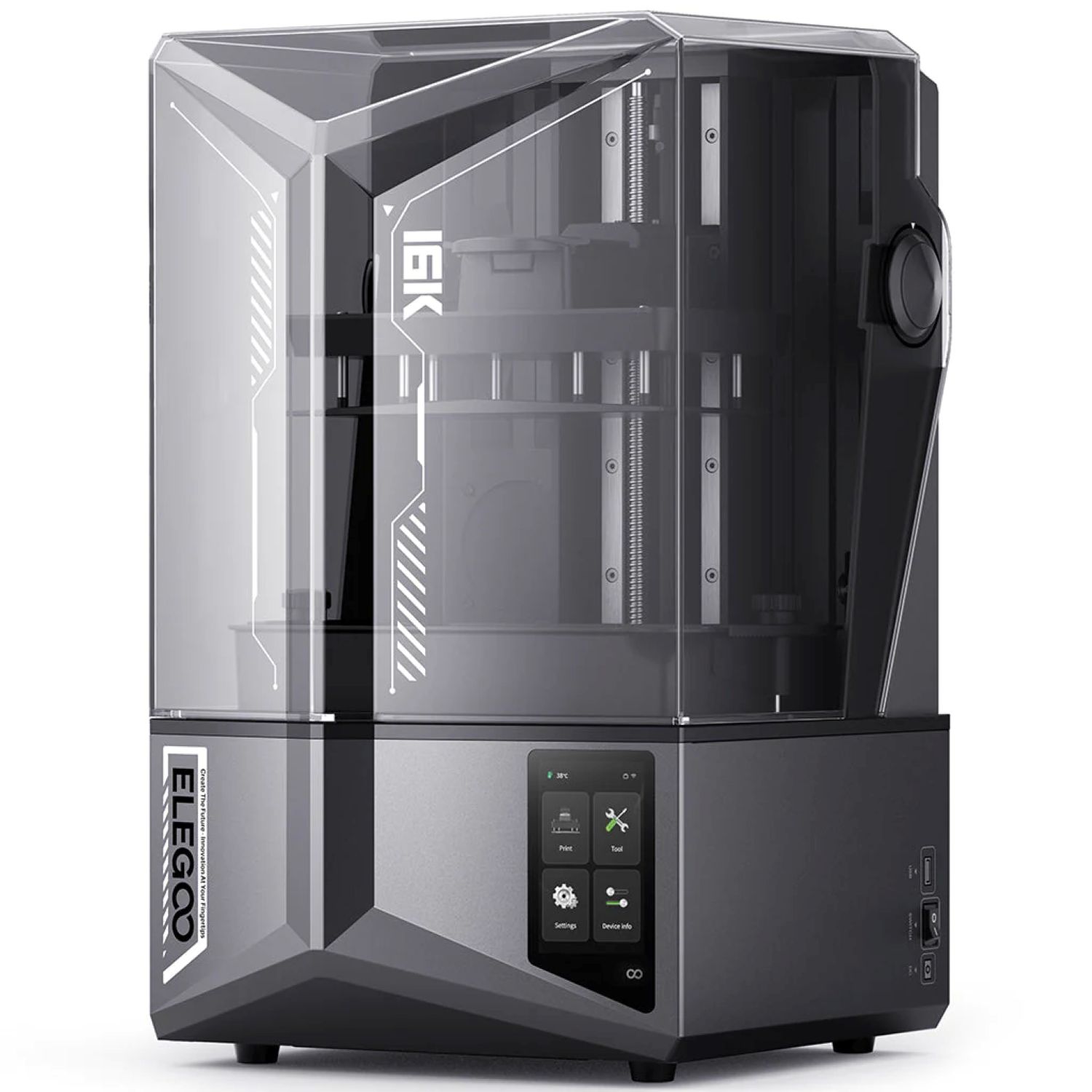
Best overall for detail and size. Not tested by Nick.
- 10 inch 16K screen, 14 x 19 micron XY
- 211.68 x 118.37 x 220 mm
- Tank heated to 30°C, tilt release, up to 150 mm/h
399 dollars (list 649.99), list price checked October 27, 2026
Check price at ElegooElegoo Mars 5 Ultra
Best for miniatures on a budget. Not tested by Nick.
- 7 inch 9K screen, 18 micron XY
- 153.36 x 77.76 x 165 mm
- AI camera, auto leveling, tilt release
284 dollars (list 338), list price checked October 27, 2026
Check price at ElegooAnycubic Photon Mono M7 Pro
Biggest plate in this guide. Not tested by Nick.
- 10.1 inch 14K screen
- 223 x 126 x 230 mm
- Heated vat, automatic resin refill, 170 mm/h with Anycubic’s high speed resin
459 dollars (list 669), list price checked October 27, 2026
Check price at AnycubicHeyGears sent Nick the Reflex and its wash and cure stations. They were unpaid units, not a paid sponsorship.
Side by side
| Printer | XY detail | Build volume (mm) | Max speed | Price checked |
|---|---|---|---|---|
| HeyGears Reflex | 33 µm | 191 x 121 x 220 | Not stated | 1,399 dollars regular |
| Elegoo Saturn 4 Ultra 16K | 14 x 19 µm | 211.68 x 118.37 x 220 | 150 mm/h | 399 dollars |
| Elegoo Mars 5 Ultra | 18 µm | 153.36 x 77.76 x 165 | 150 mm/h | 284 dollars |
| Anycubic Photon Mono M7 Pro | Not stated | 223 x 126 x 230 | 170 mm/h (high speed resin) | 459 dollars |
The one Nick has used: HeyGears Reflex
HeyGears sent Nick the Reflex and its wash and cure stations. Nick avoided resin for years. The chemicals, the cleanup and the workflow weren’t worth it to him, until the Reflex. He says so at 0:16.
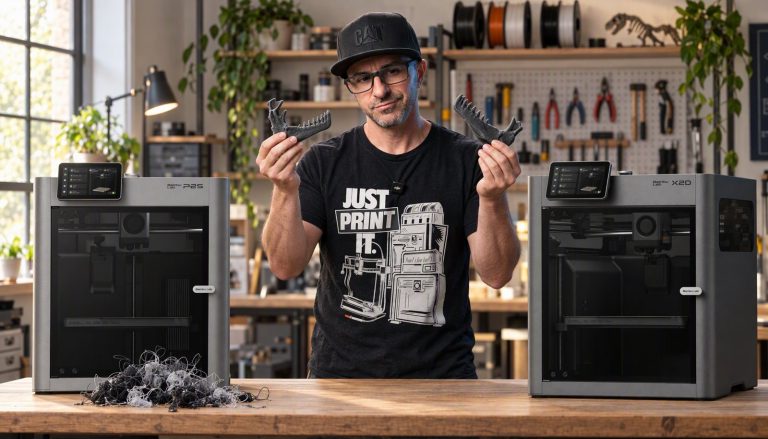
He printed the same Star Wars Rancor model on the Reflex and on his Bambu Lab A1 at its finest 0.08 mm layers. The resin version took 41 hours and about 48 dollars of HeyGears’ PAF10 resin. The A1 took 90 hours and about 7 dollars of PLA. Those are his May 2025 costs for that one print. The resin print showed skin texture, tooth ridges and claws the A1 couldn’t reproduce. The numbers are at 5:25.
The workflow is where he was won over. Resin bottles load upside down and the printer meters the resin itself, which HeyGears calls Automatic Resin Refill, so there’s no pouring. Its Blueprint slicer generates supports well once you learn it, and his early failures were his own mistake: he printed the Rancor solid without hollowing it. After that, zero failures. That’s at 9:41.
Not everything is perfect. He calls the wash box a little overengineered, says the build plate only fits in it for smaller prints, and wishes HeyGears opened up its fairly closed resin ecosystem. HeyGears’ resins are premium priced.
How to choose a resin printer
Detail. Smaller XY pixels mean finer surface detail. The Saturn 4 Ultra 16K lists 14 x 19 microns, the Mars 5 Ultra 18 and the Reflex 33, by their makers’ figures. Anycubic doesn’t give an XY figure for the M7 Pro on its page.
Build volume. Resin plates are small. If you print helmets or big statues, split the model or use FDM. Nick split his Rancor into four parts.
Heating. All four warm the resin, by their makers’ accounts. The Saturn 4 Ultra 16K heats its tank to 30°C, the M7 Pro has a temperature controlled vat, and the Reflex warms its resin to 22°C, according to their makers.
Resin vs filament. If you haven’t decided between the two, start with our resin vs filament guide. Nick’s view is that resin complements FDM rather than replacing it.
Ventilation and safety
Liquid resin isn’t something to handle bare handed. Elegoo’s own getting started guide says to wear nitrile gloves, a mask, safety goggles and an apron when handling resin, to work somewhere with good ventilation away from UV light, and to protect your eyes while curing. Nick says the same in his video: you need isopropyl alcohol for cleaning and gloves for handling. That’s at 4:17.
- Work in a well ventilated space, away from UV light.
- Wear nitrile gloves, a mask, goggles and an apron when you handle liquid resin.
- Wash prints in 95% or stronger isopropyl alcohol, Elegoo’s figure.
- Protect your eyes from the UV light while curing.
- Elegoo sells the Saturn 4 Ultra as a Combo with an air purifier for 518 dollars (list 699).
What resin printing costs to run
The printer is only part of it. A wash and cure station saves a lot of mess: Elegoo’s Mercury Plus V3.0 was 109 dollars. Resin runs about 19 to 24 dollars a kilo for Elegoo’s ABS like resin and Anycubic’s standard resin. Add isopropyl alcohol, gloves and spare release film.
Nick’s comparison puts it in one line: 48 dollars of resin against 7 dollars of PLA for the same model, and about 20 minutes of washing and curing per part. For close up display pieces he says it’s absolutely worth it. For larger or purely functional models, maybe not.
| Item | Price checked |
|---|---|
| Elegoo Mercury Plus V3.0 wash and cure | 109 dollars (list 199.99) |
| Elegoo ABS Like Resin V3.0+, 1 kg | 18.99 dollars |
| Anycubic Standard Resin V2, 1 kg | 23.99 dollars (list 34.99) |
Resin printer questions
What is the best resin 3D printer?
For most buyers, the Elegoo Saturn 4 Ultra 16K: 14 x 19 micron detail, a heated tank and a 211 x 118 x 220 mm volume for 399 dollars when we checked. It’s spec based, not tested by Nick.
What is the best resin printer for miniatures?
On a budget, the Elegoo Mars 5 Ultra at 18 microns XY for 284 dollars. The Saturn 4 Ultra 16K is finer at 14 x 19 microns with a bigger plate.
Has Nick tested any of these resin printers?
Only the HeyGears Reflex, which he filmed against his Bambu Lab A1. HeyGears sent Nick the Reflex and its wash and cure stations. The other picks are not tested by Nick.
Is resin 3D printing safe at home?
With care. Elegoo’s guide calls for nitrile gloves, a mask, goggles and an apron, a well ventilated room away from UV light, and eye protection while curing.
Is resin printing more expensive than FDM?
Usually. In Nick’s test the same model cost about 48 dollars in resin and 7 dollars in PLA, plus a wash and cure step for every part.
Resin or FDM for a first printer?
Nick’s answer is that resin complements FDM, and that an FDM printer like the Bambu Lab A1 is still the practical everyday choice for most makers.
- Planet 3DP video: HeyGears Reflex vs Bambu A1, the same model two ways (May 2025) (checked October 27, 2026)
- HeyGears US store: Reflex specifications and price (checked October 27, 2026)
- Elegoo US store: Saturn 4 Ultra 16K specifications and price (checked October 27, 2026)
- Elegoo US store: Mars 5 Ultra specifications and price (checked October 27, 2026)
- Anycubic US store: Photon Mono M7 Pro features and price (checked October 27, 2026)
- Elegoo US store: Saturn 4 Ultra Combo with Air Purifier (checked October 27, 2026)
- Elegoo US store: Mercury Plus V3.0 wash and cure (checked October 27, 2026)
- Elegoo: Get Started in Resin Printing (safety) (checked October 27, 2026)
- Planet 3DP price tracker: resin printer and resin prices (checked October 27, 2026)

Host of Planet 3DP. I avoided resin for years. The HeyGears Reflex is the resin printer I now keep alongside my FDM machines. Planet 3DP on YouTube.
Last checked October 27, 2026.