
What Nick measured on the H2C
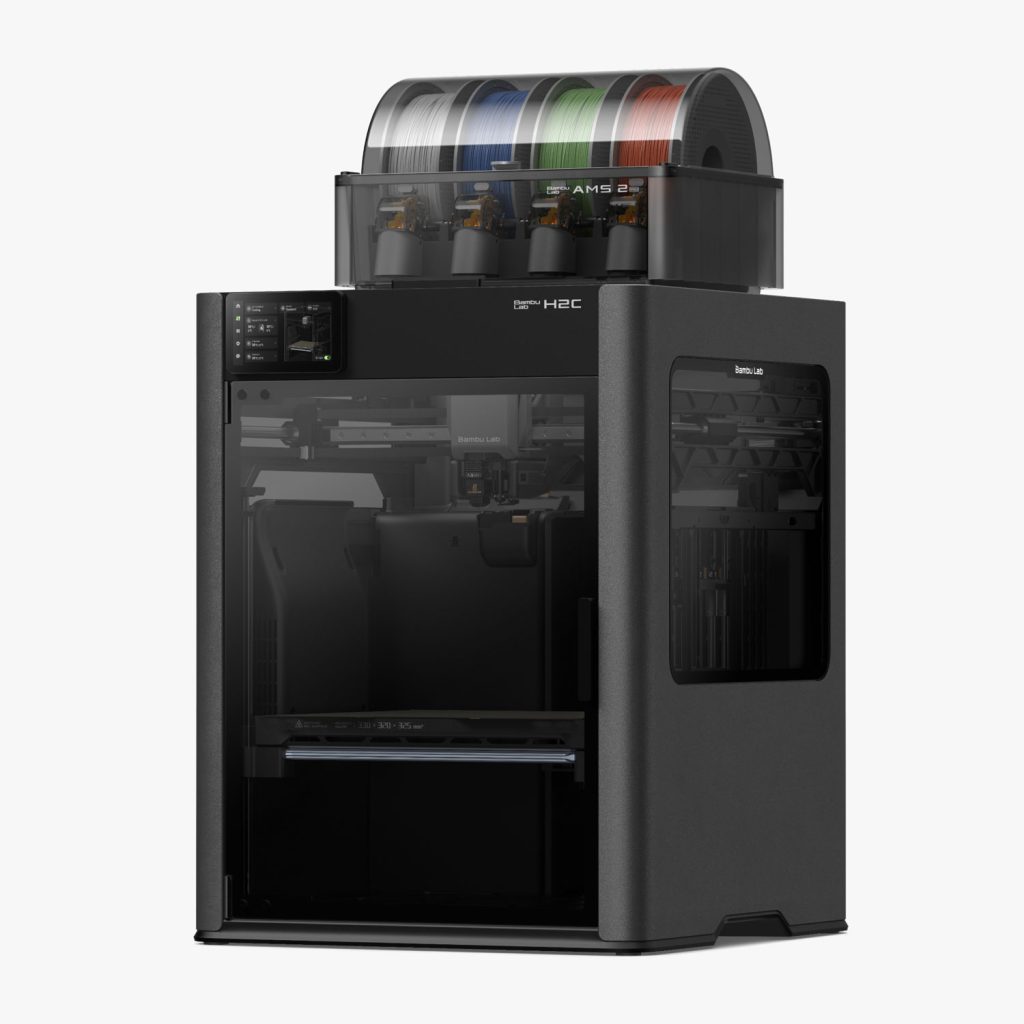
Planet 3DP’s Nick Nicholls reviewed the H2C at launch in November 2025 with three multicolour prints, each set against the same model sliced for his single hotend Bambu Lab H2S (watch at 4:52). The first print on the machine, a Borderlands ripper mask, took 2 days 5 hours. The slicer put the same model at 4 days 1 hour on the H2S, and the H2C saved 853 g of filament, close to a full roll. A hand painted witch with about 1,400 to 1,500 colour changes saved 504 g (watch at 6:11), and a small Grinch dog saved 227 g. That’s 1,584 g across three prints, which he puts at about 22 dollars of filament (watch at 8:36).
How it works, and what isn’t zero
Instead of purging one hotend between colours, the H2C swaps whole hotends from a rack, and Bambu Lab says induction heating brings each one to temperature in 8 seconds. Bambu Studio decides which filament goes in which hotend. Nick logged zero mispicks after over 5,000 hotend changes, with no maintenance on the changer (watch at 2:44). His review calls the witch print zero poop waste, but his setup video still showed a prime tower at 23% of that print (watch at 4:54), and each hotend primes once when a new filament is first loaded, which Bambu’s own fine print also says. Much less waste, then, not none.
What bugged him
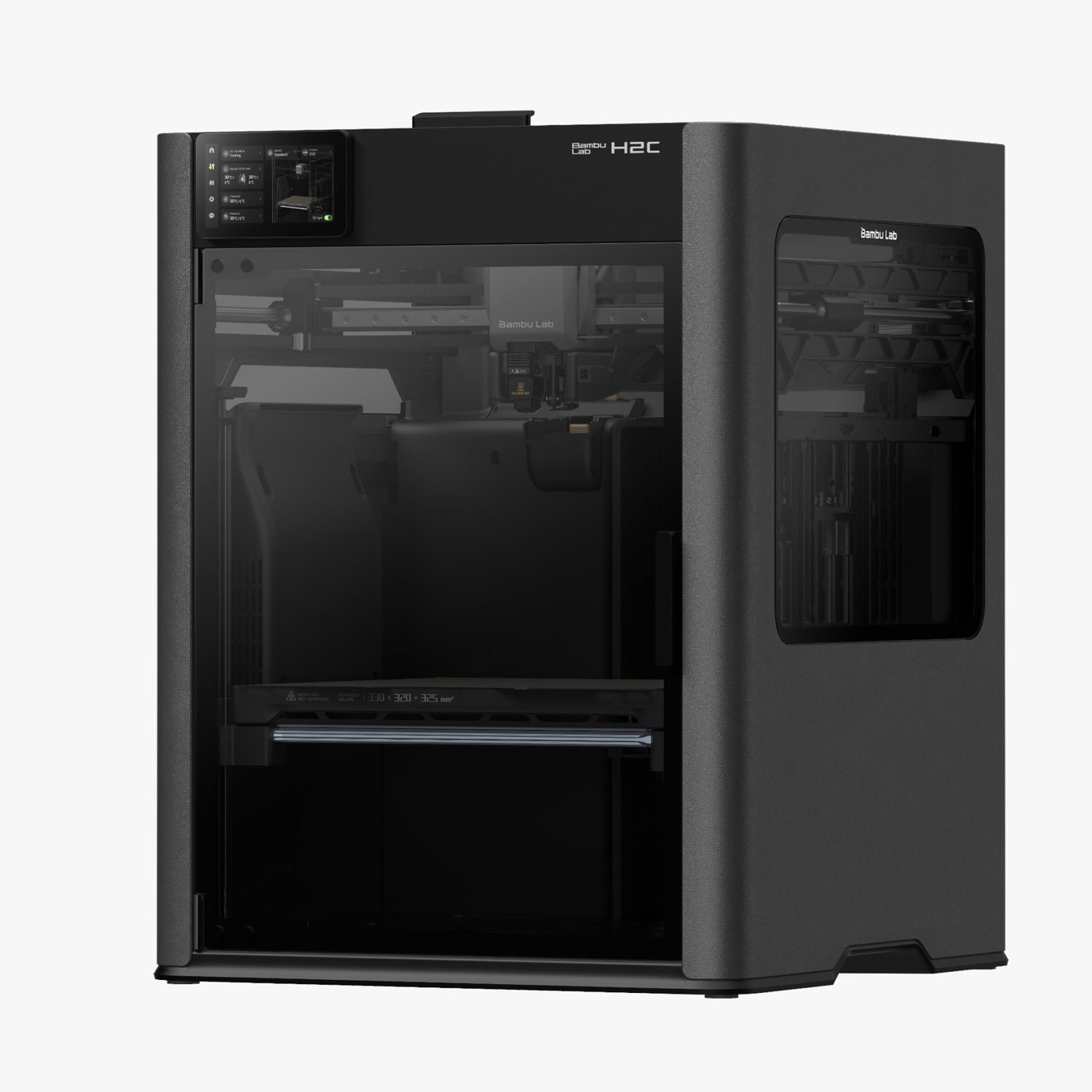
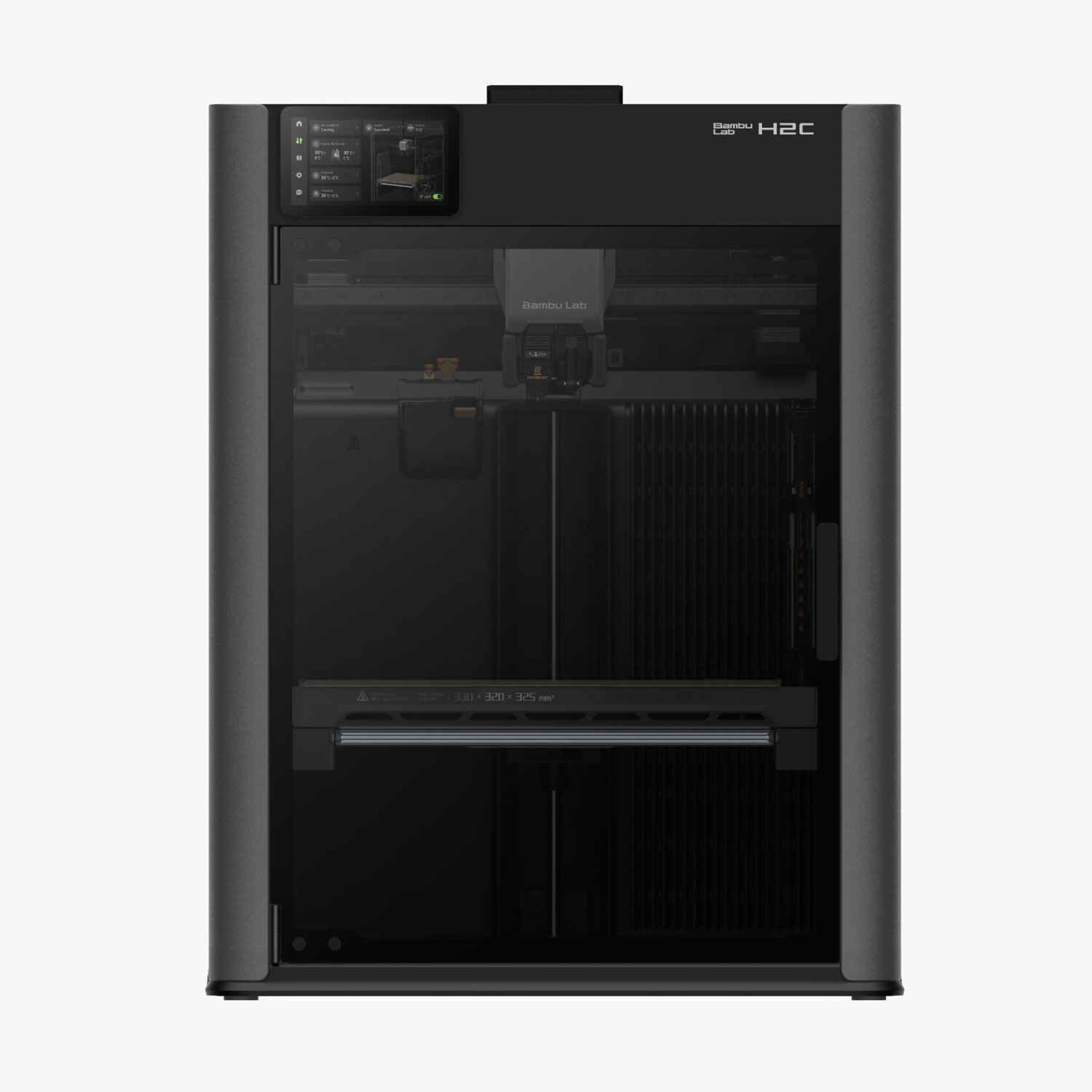
It’s louder than an A1. The induction heating hums and the swap mechanism clunks, but only for seconds at a time, and he still takes phone calls next to it (watch at 9:43). It wobbles while printing, like the H2S, which doesn’t bother him. The hotend rack also costs some bed space. In the video Nick quotes 320 by 320 by 325 mm, against 340 by 320 by 340 on the H2S (watch at 10:20). Bambu Lab’s store lists the H2C at 330 by 320 by 325 mm and its spec page gives 330 by 320 by 320 for both nozzles together, so this page uses Bambu’s store figure, the one in the table above.
Who it suits
Nick’s verdict is that the H2C is for anyone who prints multicolour regularly, is tired of feeling guilty about waste, or works with expensive specialty filament, and he calls it “a genuine breakthrough” (watch at 12:10). Bambu Lab lists 350°C nozzles, a 65°C actively heated chamber and a 1,000 mm/s top toolhead speed, so engineering filament is in scope. If you mostly print in one colour, or need the larger build volume, he says the H2S still makes sense. And he wouldn’t suggest it as a first printer (watch at 27:55).